Services

Book Appointment
Pulmonary Embolism
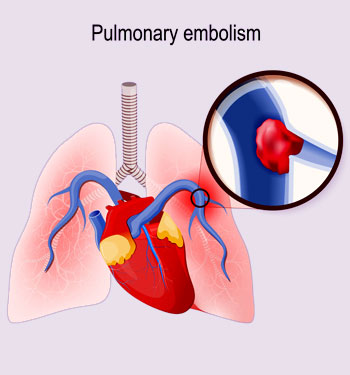
Pulmonary Embolism (PE) is a potentially life-threatening condition where one or more arteries in the lungs become blocked by a blood clot (embolus). Most commonly, these clots originate in the deep veins of the legs (deep vein thrombosis – DVT) and travel to the lungs. PE causes reduced blood flow, hypoxia, and strain on the right side of the heart, which can be fatal if not promptly treated.
Causes / Risk Factors (Virchow’s Triad)
1. Venous stasis- Prolonged immobility (bed rest, long travel)
- Post-operative period
- Trauma, surgery, central lines
- Cancer
- Pregnancy or postpartum
- Oral contraceptives
- Genetic thrombophilias (Factor V Leiden, Protein C/S deficiency)
- Antiphospholipid syndrome
Common Symptoms
- Sudden shortness of breath
- Pleuritic chest pain (sharp, worse with inspiration)
- Cough (may be dry or with hemoptysis)
- Tachypnea (rapid breathing)
- Tachycardia (rapid heart rate)
- Hypoxia
- Syncope or near-syncope (especially in massive PE)
- Leg swelling or pain (sign of DVT)
Prevention
- Early mobilization after surgery
- Compression stockings or pneumatic devices
- Prophylactic anticoagulation in high-risk patients (hospitalized, post-op)
- Avoid long immobility (e.g., during travel)