
Services

Book Appointment
Lung Abscess
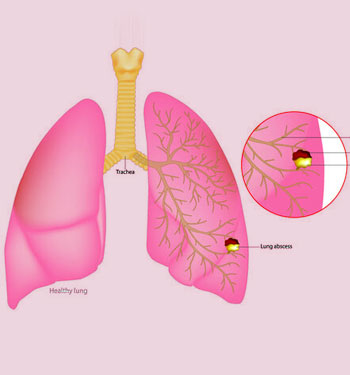
A lung abscess is a localized collection of pus within the lung tissue, caused by a necrotizing infection that leads to the destruction of lung parenchyma. It is most often due to aspiration of oropharyngeal secretions, particularly in individuals with impaired consciousness, poor dental hygiene, or underlying lung disease.
A lung abscess typically appears as a cavity with an air-fluid level on imaging and may present with a chronic cough, foul-smelling sputum, and systemic symptoms.
Types of Lung Abscess
1. Primary Lung Abscess- Occurs in previously healthy lungs
- Most often caused by aspiration
- Common in alcoholics, seizure patients, or those with impaired gag reflex
- Occurs in patients with pre-existing lung conditions like COPD, bronchial obstruction, or immunosuppression
- Can be due to hematogenous spread, neoplasm, or post-surgical causes
Common Symptoms
- Persistent cough (often productive)
- Foul-smelling or purulent sputum
- Hemoptysis (blood in sputum)
- Fever with chills and night sweats
- Weight loss, fatigue
- Chest pain (pleuritic in nature)
- Clubbing in chronic cases
Risk Factors
- Aspiration (due to altered consciousness: alcohol, seizures, anesthesia)
- Poor dental hygiene
- Chronic lung diseases (e.g., bronchiectasis, COPD)
- Immunosuppression (HIV, diabetes, malignancy)
- Foreign body aspiration
- Esophageal disorders
Prevention
- Prevent aspiration (especially in at-risk individuals)
- Good oral hygiene
- Prompt treatment of pneumonia
- Head elevation in unconscious patients