
Services

Book Appointment
Eosinophilic Lung Disease
Eosinophilic Lung Disease refers to a group of lung disorders characterized by the accumulation of eosinophils (a type of white blood cell involved in allergic reactions and parasitic infections) in the lung tissues or airways. This abnormal eosinophilic infiltration can cause inflammation, airway damage, and respiratory symptoms.
These diseases may be primary (idiopathic) or secondary to causes such as infections, drugs, or systemic conditions.
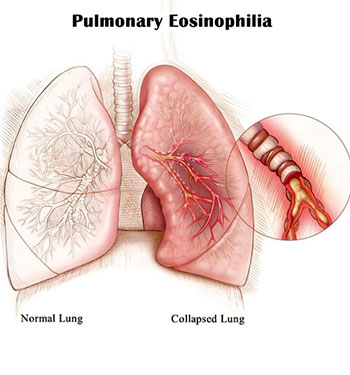
Common Types of Eosinophilic Lung Diseases
1. Acute Eosinophilic Pneumonia (AEP)- Rapid onset of fever, cough, and respiratory failure
- Often in previously healthy individuals
- Associated with smoking, new environmental exposures
- Subacute course with cough, dyspnea, and weight loss
- Radiology shows "photographic negative" of pulmonary edema (peripheral infiltrates)
- Often seen in asthmatics or allergic individuals
- Transient infiltrates and peripheral eosinophilia
- Usually due to parasitic infections (e.g., Ascaris)
- Marked eosinophilia with multi-organ involvement including lungs
- Rare vasculitis involving small to medium vessels
- Features: Asthma, eosinophilia, and systemic vasculitis
- Caused by drugs like nitrofurantoin, daptomycin, NSAIDs, phenytoin
- Strongyloides, Ascaris, Toxocara, etc.
Symptoms
- Dry or productive cough
- Shortness of breath
- Wheezing (especially in EGPA or CEP)
- Fever
- Night sweats
- Weight loss
- Chest discomfort
- Fatigue
- Rashes or neuropathy (in systemic forms like EGPA)