
Services

Book Appointment
Pleural Effusion
Pleural effusion is the abnormal accumulation of fluid in the pleural space, the thin cavity between the lungs and the chest wall. This space normally contains a small amount of lubricating fluid (~5–15 mL), but in pleural effusion, the volume increases significantly, potentially leading to lung compression, impaired breathing, and chest discomfort.
It is not a disease itself, but a clinical manifestation of various underlying conditions such as heart failure, infections, malignancies, or liver and kidney diseases.
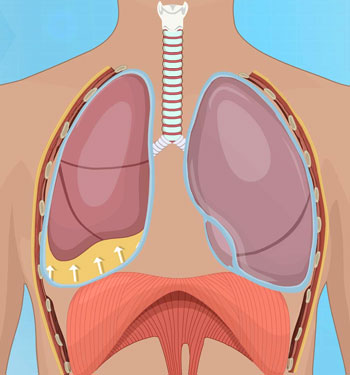
Types of Pleural Effusion
1. Transudative EffusionCaused by systemic factors that affect pressure balance (increased hydrostatic or decreased oncotic pressure).
Common causes:
- Congestive heart failure (most common)
- Cirrhosis (hepatic hydrothorax)
- Nephrotic syndrome
- Hypoalbuminemia
Caused by local inflammation or injury to pleura
Common causes:
- Pneumonia (parapneumonic effusion/empyema)
- Tuberculosis
- Malignancy (lung, breast, lymphoma)
- Pulmonary embolism
- Autoimmune diseases (e.g., lupus, rheumatoid arthritis)
Symptoms
- Shortness of breath
- Chest pain (pleuritic – worsens with deep breathing or coughing)
- Dry or productive cough
- Fever (if infective)
- Decreased breath sounds and dullness to percussion (on physical exam)